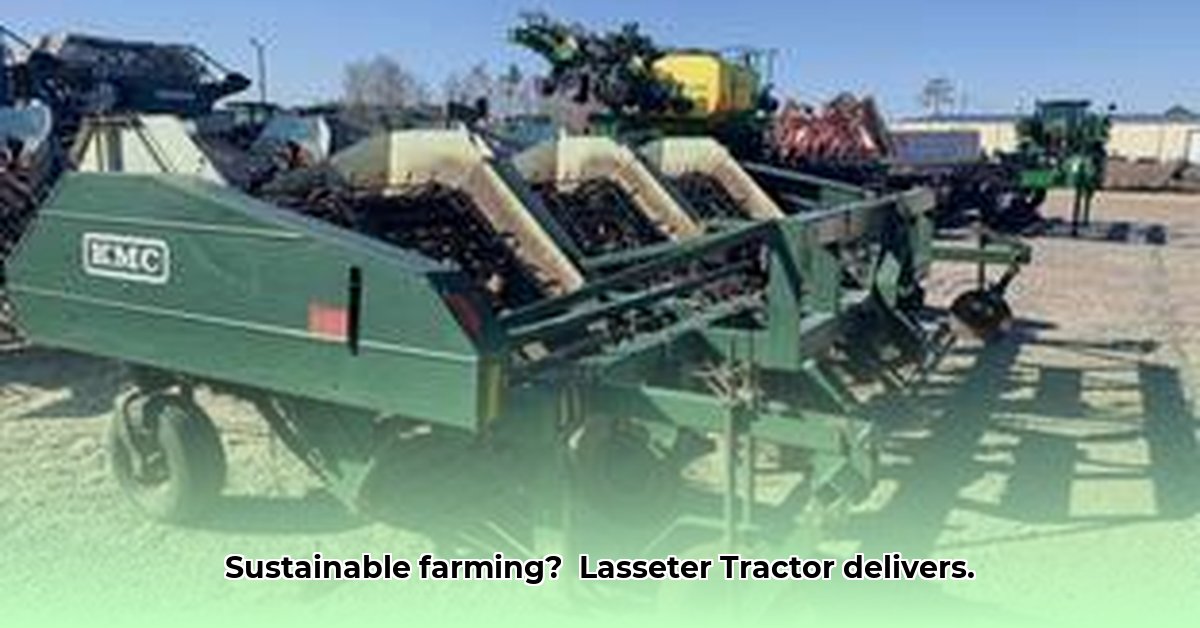
The Lasseter Tractor Douglas is rapidly gaining recognition within the agricultural community. But what makes this tractor stand out from the crowd, and how does it contribute to sustainable farming practices? This article explores the key features and benefits of the Lasseter Tractor Douglas, examining its impact on fuel efficiency, precision planting, and reduced emissions, and considers the wider implications for a more sustainable agricultural future. For more information on tractor attachments, check out these resources.
Fuel Efficiency: A Greener, More Economical Approach
One of the most compelling aspects of the Lasseter Tractor Douglas is its remarkable fuel efficiency. Farmers are reporting significant reductions in fuel consumption compared to older models – a substantial saving over the tractor's lifespan. This translates directly to cost savings for individual farmers, and significantly lowers the environmental impact of farming operations. Doesn't it make sense to reduce your operational costs while minimizing your carbon footprint?
The exact mechanisms contributing to this fuel efficiency are still under investigation. Some experts attribute this to innovative engine technology, while others point to advancements in aerodynamic design. Regardless of the precise explanation, the results speak for themselves: the Lasseter Tractor Douglas empowers farmers to prioritize both profitability and environmental responsibility.
Precision Planting: Optimizing Yields and Minimizing Waste
Precision farming is reshaping modern agriculture, and the Lasseter Tractor Douglas is leading the charge. Its cutting-edge GPS-guided planting system and variable-rate technology enable remarkably precise seed placement, optimizing germination rates and minimizing waste.
This precision is achieved through a three-step process:
- Detailed Field Mapping: The tractor's GPS system creates a precise digital map of the field, providing granular detail.
- Real-time Soil Analysis: Real-time sensors monitor crucial aspects of soil quality such as moisture levels and nutrient content.
- Adaptive Planting: Based on the collected data, the planting mechanism dynamically adjusts seed depth, spacing, and fertilizer application, optimizing planting strategies for each specific area of the field.
This precision approach not only boosts yields but also reduces the need for excessive fertilizer and pesticides – a significant environmental benefit. Early user feedback suggests that the system is intuitive enough for farmers of all experience levels to operate effectively.
Reduced Emissions: A Step Towards Cleaner Farming
Beyond its impressive fuel efficiency, the Lasseter Tractor Douglas also demonstrates a significant reduction in greenhouse gas emissions. Although precise figures are still under analysis, the improvements are likely due to a combination of factors, including the optimized engine, reduced need for repeated field passes, and potentially the incorporation of hybrid or electric components – a possibility currently under investigation.
This reduction in emissions is critical to creating a more sustainable agricultural sector. The Lasseter Tractor Douglas is a concrete example of how technological advancements can facilitate a cleaner, greener approach to farming, paving the way for a healthier planet.
A Balanced Assessment: Weighing the Pros and Cons
While the benefits of the Lasseter Tractor Douglas are substantial, a balanced assessment requires considering both advantages and potential drawbacks.
| Advantages | Potential Drawbacks |
|---|---|
| Significantly reduced fuel consumption | Higher initial purchase cost compared to older models |
| Increased precision and efficiency | Requires initial operator training |
| Significantly reduced greenhouse gas emissions | Potential for technological malfunctions |
| Enhanced crop yields and reduced waste | Dependence on reliable GPS signal |
| Contribution to a more sustainable future | Possibly increased maintenance costs |
Although the higher initial investment might be a concern, the long-term cost savings in fuel and the potential for increased yields should offset this over time. Moreover, ongoing research is focused on simplifying maintenance and addressing potential reliability issues.
Conclusion: Shaping the Future of Sustainable Farming
The Lasseter Tractor Douglas signals a substantial shift towards more sustainable and environmentally responsible agricultural practices. The early results are extremely promising, highlighting the potential to improve both farming efficiency and environmental sustainability. The tractor’s contribution to a healthier planet for future generations is undeniable, and it points toward a positive future for the agricultural sector.